Silo Object Locking
Overview
MinIO Object Locking (“Object Retention”) enforces Write-Once Read-Many (WORM) immutability to protect versioned objects from deletion. MinIO supports both duration based object retention and indefinite legal hold retention.
MinIO Object Locking provides key data retention compliance and meets SEC17a-4(f), FINRA 4511(C), and CFTC 1.31(c)-(d) requirements as per Cohasset Associates.
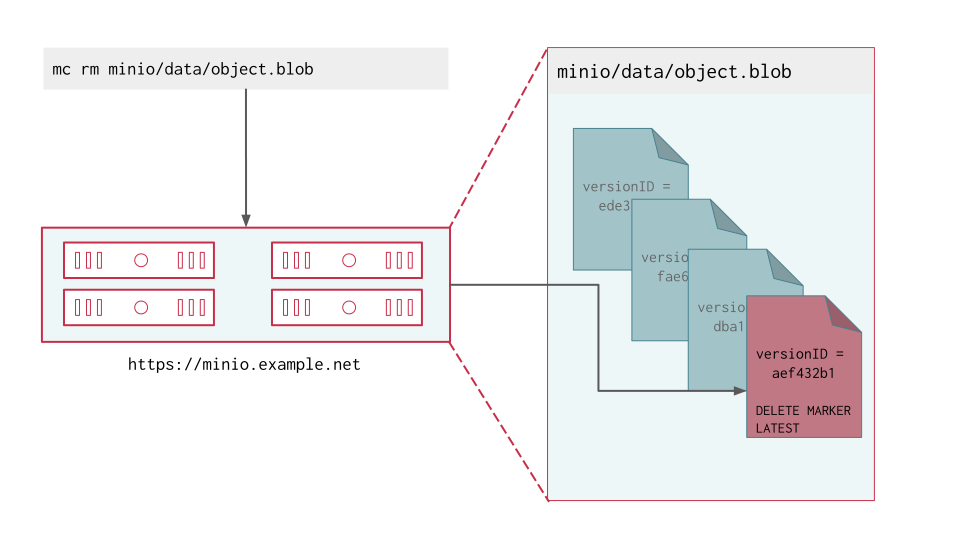
MinIO versioning preserves the full history of object mutations. However, applications can explicitly delete specific object versions.
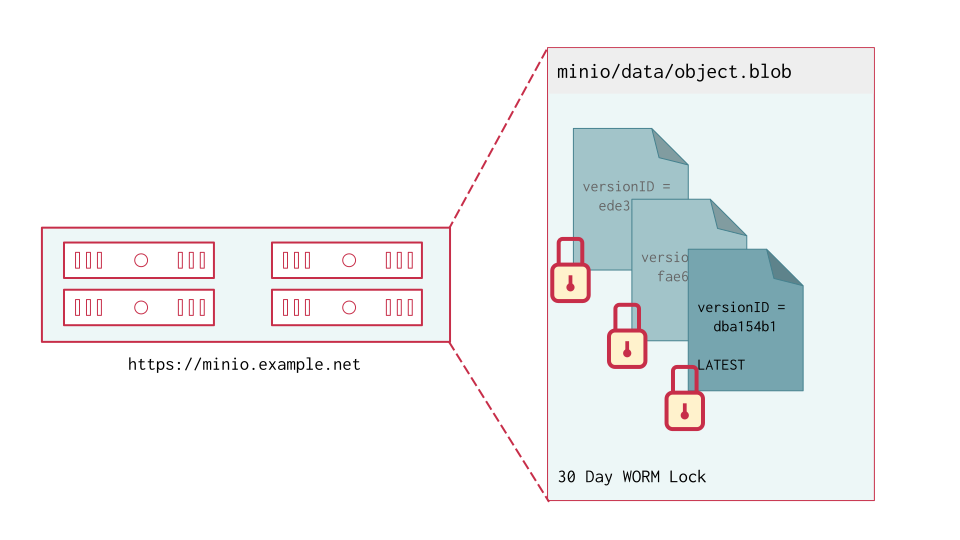
Applying a default 30 Day WORM lock to objects in the bucket ensures a minimum period of retention and protection for all object versions.
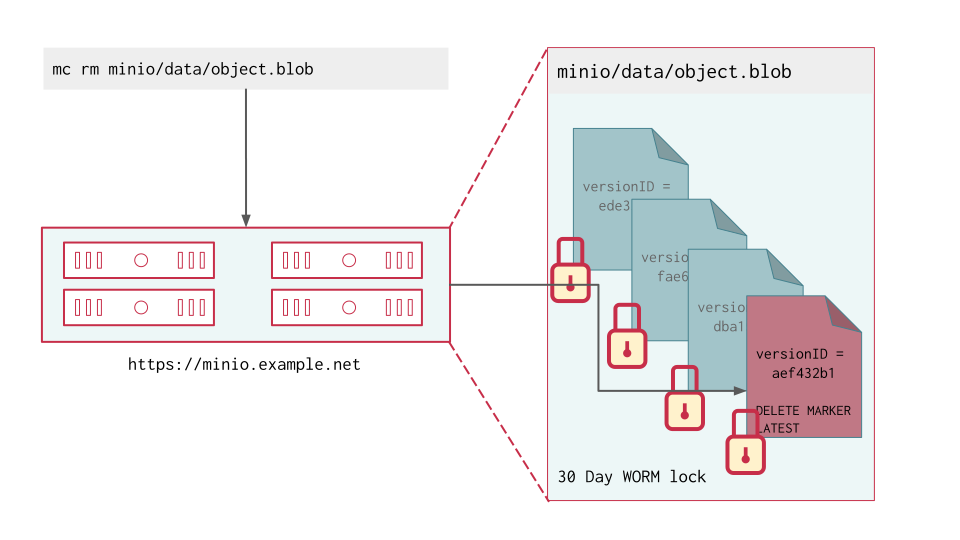
Delete operations follow normal behavior in versioned buckets, where MinIO creates a DeleteMarker for the object. However, non-Delete Marker versions of the object remain under the retention rules and are protected from any specific deletion or overwrite attempts.
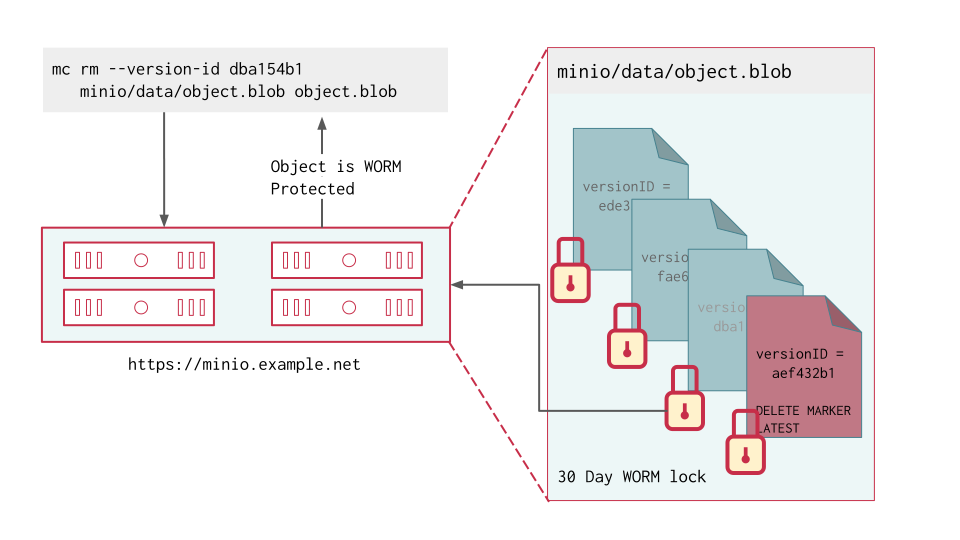
MinIO blocks any attempt to delete a specific object version held under WORM lock. The earliest possible time after which a client may delete the version is when the lock expires.
MinIO object locking is feature and API compatible with AWS S3. This page summarizes Object Locking / Retention concepts as implemented by MinIO. See the AWS S3 documentation on How S3 Object Lock works for additional resources.
You can only enable object locking during bucket creation as per S3 behavior. You cannot enable object locking on a bucket created without locking enabled. You can then configure object retention rules at any time. Object locking requires versioning and enables the feature implicitly.
Interaction with Versioning
Objects held under WORM locked are immutable until the lock expires or is explicitly lifted. Locking is per-object version, where each version is independently immutable.
If an application performs an unversioned delete operation on a locked object, the operation produces a delete marker. Attempts to explicitly delete any WORM-locked object fail with an error. Delete Markers are not eligible for protection under WORM locking. See the S3 documentation on Managing delete markers and object lifecycles for more information.
For example, consider the following bucket with GOVERNANCE Mode locking enabled by default:
Attempting to perform a delete on a specific version of data.csv fails due to the object locking settings:
Attempting to perform an unversioned delete on data.csv succeeds and creates a new DeleteMarker for the object:
Interaction with Lifecycle Management
MinIO object expiration respects any active object lock and retention settings for objects covered by the expiration rule.
- For expiration rules operating on only the current object version, MinIO creates a Delete Marker for the locked object.
- For expiration rules operating on non-current object versions, MinIO can only expire the non-current versions after the retention period has passed or has been explicitly lifted (e.g. legal holds).
For example, consider the following bucket with GOVERNANCE Mode locking enabled by default for 45 days:
Creating an expiration rule for current objects older than 7 days results in a Delete Marker for the object:
However, an expiration rule for non-current objects older than 7 days would only take effect after the configured WORM lock expires. Since the bucket has a 45 day GOVERNANCE retention set, only the v1 version of data.csv is unlocked and therefore eligible for deletion.
Tutorials
Create Bucket with Object Locking Enabled
You must enable object locking during bucket creation as per S3 behavior. You can create a bucket with object locking enabled using the MinIO mc CLI or using an S3-compatible SDK.
Use the mc mb command with the --with-lock option to create a bucket with object locking enabled:
- Replace
ALIASwith thealiasof a configured MinIO deployment. - Replace
BUCKETwith thenameof the bucket to create.
Configure Bucket-Default Object Retention
You can configure object locking rules (“object retention”) using the MinIO mc CLI, or using an S3-compatible SDK.
MinIO supports setting both bucket-default and per-object retention rules. The following examples set bucket-default retention. For per-object retention settings, defer to the documentation for the PUT operation used by your preferred SDK.
Use the mc retention set command with the --recursive and --default options to set the default retention mode for a bucket:
- Replace
MODEwith either either COMPLIANCE or GOVERNANCE. - Replace
DURATIONwith the duration for which the object lock remains in effect. - Replace
ALIASwith thealiasof a configured MinIO deployment. - Replace
BUCKETwith the name of the bucket on which to set the default retention rule.
Enable Legal Hold Retention
You can enable or disable indefinite legal hold retention for an object using the MinIO mc CLI or using an S3-compatible SDK.
You can place a legal hold on an object already held under a COMPLIANCE or GOVERNANCE lock. The object remains WORM locked under the legal hold even when the retention lock expires. You or another user with the necessary permissions must explicitly lift the legal hold to remove the WORM lock.
Use the mc legalhold set command to toggle the legal hold status on an object.
- Replace
ALIASwith thealiasof a configured MinIO deployment. - Replace
PATHwith the path to the object for which to enable the legal hold.
Object Retention Modes
MinIO implements the following S3 Object Locking Modes:
Mode |
Summary |
|---|---|
Prevents any operation that would mutate or modify the object or its locking settings by non-privileged users. Users with the MinIO lifts the lock automatically after the configured retention rule duration has passed. |
|
Prevents any operation that would mutate or modify the object or its locking settings. No MinIO user can modify the object or its settings, including the MinIO root user. MinIO lifts the lock automatically after the configured retention rule duration has passed. |
GOVERNANCE Mode
An object under GOVERNANCE lock is protected from write operations by non-privileged users.
GOVERNANCE locked objects enforce managed-immutability for locked objects, where users with the s3:BypassGovernanceRetention action can modify the locked object, change the retention duration, or lift the lock entirely. Bypassing GOVERNANCE retention also requires setting the x-amz-bypass-governance-retention:true header as part of the request.
The MinIO GOVERNANCE lock is functionally identical to the S3 GOVERNANCE mode.
COMPLIANCE Mode
An object under COMPLIANCE lock is protected from write operations by all users, including the MinIO root user.
COMPLIANCE locked objects enforce complete immutability for locked objects. You cannot change or remove the lock before the configured retention duration has passed.
The MinIO COMPLIANCE lock is functionally identical to the S3 COMPLIANCE mode.
Legal Hold
An object under legal hold is protected from write operations by all users, including the MinIO root user.
Legal holds are indefinite and enforce complete immutability for locked objects. Only privileged users with the s3:PutObjectLegalHold permission can set or lift the legal hold.
Legal holds apply at the object level. If you enable legal hold for a group of objects, such as the contents of a bucket, subsequently created objects in that bucket are not affected.
Legal holds are complementary to both GOVERNANCE Mode and COMPLIANCE Mode retention settings. An object held under both legal hold and a GOVERNANCE/COMPLIANCE retention rule remains WORM locked until the legal hold is lifted and the rule expires.
For GOVERNANCE locked objects, the legal hold prevents mutating the object even if the user has the necessary privileges to bypass retention.